
IPTV Basics
2026-06-21 by FreeLiveIPTV Editorial
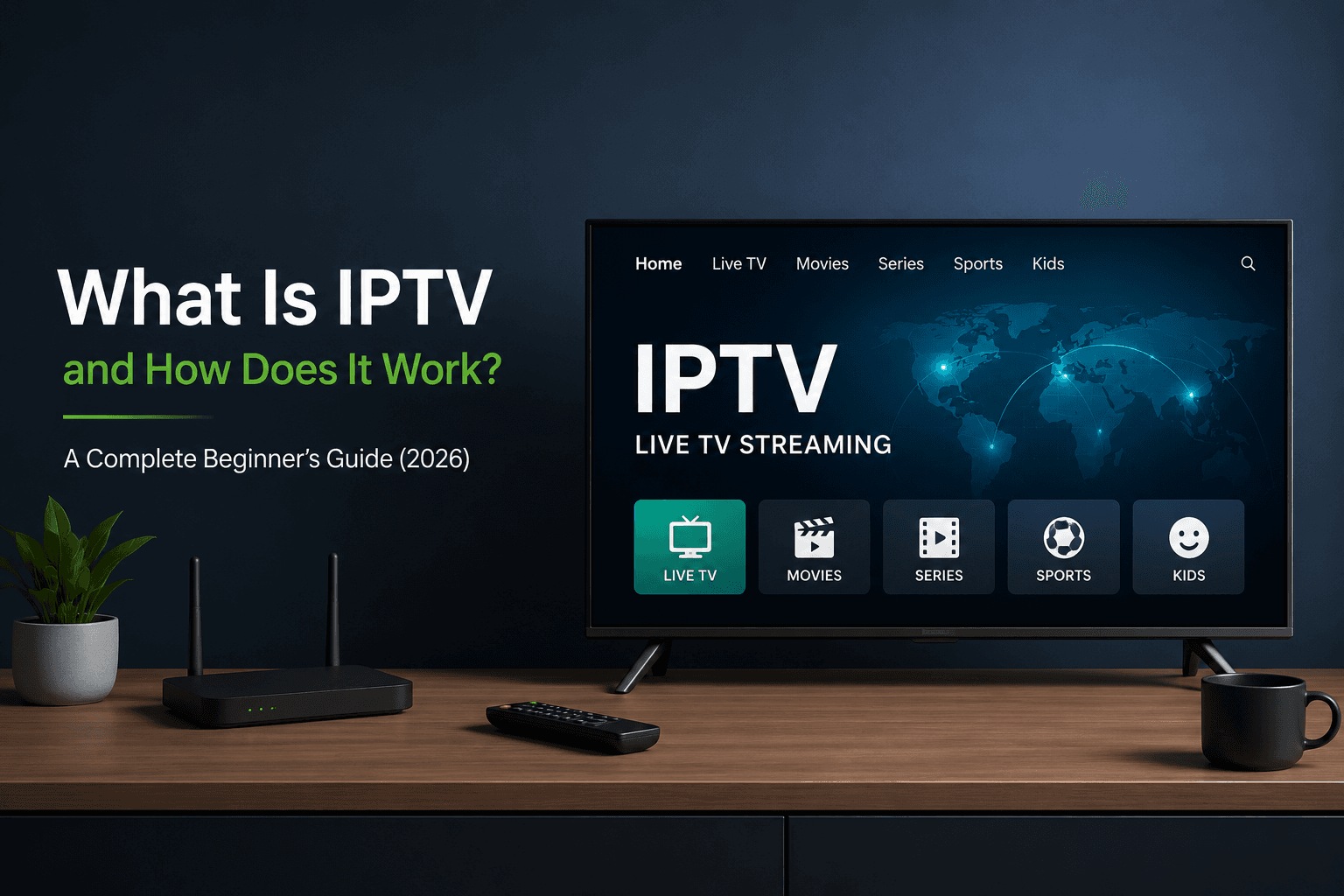
Internet Protocol Television (IPTV) has become one of the most popular ways to watch television content online. Instead of relying on traditional cable or satellite infrastructure, IPTV delivers television channels and video streams through internet protocols, allowing viewers to access content from computers, smartphones, tablets, smart TVs, and streaming devices.
In this guide, you'll learn what IPTV is, how it works, the different types of IPTV services, its advantages and limitations, and how viewers discover channels through platforms like FreeLiveIPTV.
IPTV stands for Internet Protocol Television.
Traditional television services deliver content through satellite signals, cable networks, or terrestrial broadcasting systems. IPTV works differently. Video content is transmitted through internet networks and played through compatible devices and applications.
This technology enables viewers to watch television channels using broadband internet connections rather than relying on traditional television infrastructure.
| Feature | Traditional TV | IPTV |
|---|---|---|
| Delivery Method | Cable/Satellite | Internet |
| Device Support | TV Only | TV, Mobile, Tablet, PC |
| Flexibility | Limited | High |
| Accessibility | Location Dependent | Internet Based |
| Channel Discovery | Provider Controlled | Multiple Sources |
Because IPTV uses internet protocols, viewers can often access content across multiple devices without requiring specialized hardware.
IPTV uses a series of servers and content delivery networks to transmit video streams over the internet.
The basic process works like this:
Most IPTV streams use technologies such as:
Adaptive streaming allows the video quality to automatically adjust based on the viewer's internet speed.
There are several categories of IPTV content.
Live IPTV streams broadcast television channels in real time.
Examples include:
Live streaming is one of the most popular IPTV use cases because viewers can watch events as they happen.
Video On Demand allows users to select and watch content whenever they choose.
Examples include:
Unlike live television, VOD content can be paused, rewound, and replayed at any time.
Some IPTV platforms provide time-shifted viewing features.
These features may include:
This gives viewers more control over when they watch content.
IPTV offers several benefits compared to traditional television services.
Users can watch content on:
Internet delivery makes it possible to access content from almost anywhere with a stable connection.
Modern IPTV platforms organize channels using metadata such as:
This helps viewers find relevant content more quickly.
Many IPTV streams support:
Quality depends on both the stream source and internet connection.
Several technologies power modern IPTV services.
HLS is one of the most widely used streaming formats today.
Benefits include:
Many IPTV channels use M3U8 playlists powered by HLS.
MPEG-DASH is another adaptive streaming standard designed for efficient internet delivery.
It provides:
Content Delivery Networks (CDNs) improve performance by delivering video from servers closer to viewers.
Benefits include:
FreeLiveIPTV focuses on helping viewers discover publicly available television channels and sports streams.
Each channel page may contain information such as:
This structured information improves navigation and helps users find relevant content.
Visitors can browse channels through the channel explorer or discover sports broadcasts from dedicated sports sections.
Metadata plays an important role in both user experience and search engine optimization.
Important metadata elements include:
Every channel page should have a descriptive title.
Example:
ESPN HD Live Stream - Sports Channel Guide
Descriptions help search engines understand page content and improve click-through rates.
Canonical tags prevent duplicate content issues.
Schema markup can help search engines understand:
Strong internal links help visitors discover related channels, sports pages, and guides.
Buffering is often caused by:
Solutions:
Public streams can change or become unavailable over time.
Possible reasons include:
Sometimes players may not support a particular stream format.
Trying a different compatible player can often resolve playback issues.
The legality of IPTV depends on the content source, broadcasting rights, and local regulations.
Many broadcasters distribute legitimate IPTV streams through official websites, applications, and authorized partners.
Users should always ensure they access content through legal and authorized sources.
No. IPTV uses internet protocols to deliver content, while cable television relies on dedicated cable infrastructure.
No. IPTV can be viewed on computers, smartphones, tablets, smart TVs, and streaming devices.
Public streams may change URLs, become restricted, or experience temporary outages.
For HD streaming, a stable broadband connection of at least 10 Mbps is generally recommended. Higher resolutions require faster speeds.
Yes. IPTV is commonly used for live sports broadcasting, including football, basketball, tennis, and international tournaments.
IPTV has transformed how viewers access television content by delivering channels and video streams through internet protocols rather than traditional broadcasting infrastructure. With support for live television, video on demand, and multi-device viewing, IPTV continues to grow as a flexible way to consume media online.
By organizing channel information, metadata, categories, and sports content effectively, platforms like FreeLiveIPTV help users discover relevant streams while improving search engine visibility and overall user experience.
---------------------------
Browse thousands of TV channels in our Channel Directory.
Looking for sports? Visit our Live Sports section.
Watch football schedules and match coverage on our FIFA Live page.
Catch up with recent match videos in FIFA Highlights.